

 Frequently Asked Question

 Completely
Australian Run
 Mention this Ad & Get
10% discount off any job
Top 7 Common Spring Pests in Sydney and How to Prevent Them
Spring in Sydney is genuinely one of the best times of the year. The jacarandas bloom, daylight stretches into the evening, and everyone spills back outdoors. But here is the thing nobody tends to put on the seasonal highlight reel: the pests come back, too.
As temperatures climb from September through to November, the city’s insect and rodent populations wake up, breed, and start looking for exactly what you have in your home: warmth, moisture, food, and shelter. For Sydney homeowners and business operators, spring is not just a time for cleaning out the garage. It is the single most critical window for pest prevention in the entire year.
This guide covers the top 7 spring pests in Sydney, drawn from over 30 years of local pest management experience. For each pest, you will find emergence timing, identification signs, practical DIY prevention steps, and guidance on when to call in a professional. Whether you are managing a family home in Baulkham Hills or a commercial premises in Surry Hills, this Sydney pest seasonal guide gives you everything you need to get ahead of the problem.
Why Spring Triggers a Surge in Pest Activity
Before diving into the individual pests, it helps to understand the mechanics. During Sydney’s cooler months, many pest species slow down dramatically. Colonies reduce in size. Insects enter states of reduced metabolic activity. Rodents conserve heat in wall cavities and roof voids.
Then spring arrives. Temperatures rise, humidity builds, and daylight hours increase. These are precisely the environmental triggers that prompt mass reproduction and foraging activity. An ant colony that sat quietly through July can grow explosively by October. A small termite nest that went undetected through winter can produce thousands of swarmers after the first spring storm.
This is why seasonal pest control in Sydney is not just a sales pitch from pest managers. It is genuinely the most cost-effective time to act.
1. Ants
Emergence Timing
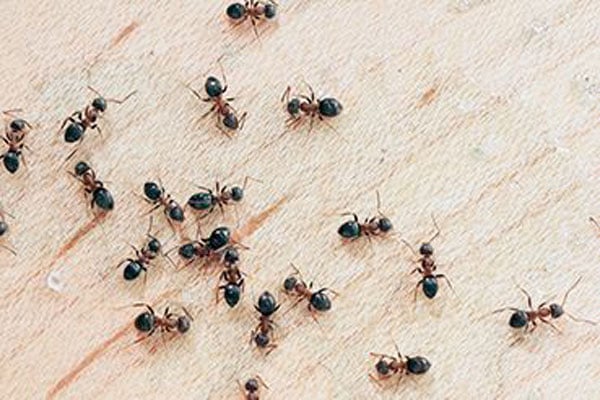
Ant colonies in Sydney begin ramping up activity from late August, with peak foraging typically between September and November. Warm soil temperatures prompt queens to increase egg laying, and new worker populations emerge almost simultaneously across the colony. If you have not seen ants inside all winter, do not assume you are clear. They have simply been waiting.
Identification Signs
- Thin, single-file trails leading from wall gaps, skirting boards, or window frames toward food sources
- Small mounds of fine soil or sand near garden beds, paths, and building perimeters
- Clusters of ants in kitchens, particularly around benchtops, pet food bowls, and bin areas
- Winged reproductive ants (alates) emerging during warm evenings, which signal a maturing colony nearby
The species most commonly encountered in Sydney homes include the black garden ant, coastal brown ant, and the particularly persistent Argentine ant, which builds interconnected super-colonies beneath footpaths and garden beds.
DIY Prevention
- Seal gaps around pipes, window frames, and skirting boards with silicone or gap filler
- Store all pantry food in airtight containers, especially sugars, cereals, and pet food
- Wipe down bench surfaces after cooking to remove grease and crumb trails
- Clear mulch, leaf litter, and timber debris from the immediate perimeter of your home
- Fix any leaking taps or drain issues, as moisture attracts ants as reliably as food does
When to Call a Professional
If you are seeing trails inside the home daily, finding multiple entry points, or the ants have returned within a week or two of DIY treatment, a colony has established itself close to or within the building structure. BugFree’s general pest control service includes targeted perimeter and interior treatment that addresses the colony, not just the visible trail.
2. Termites
Emergence Timing
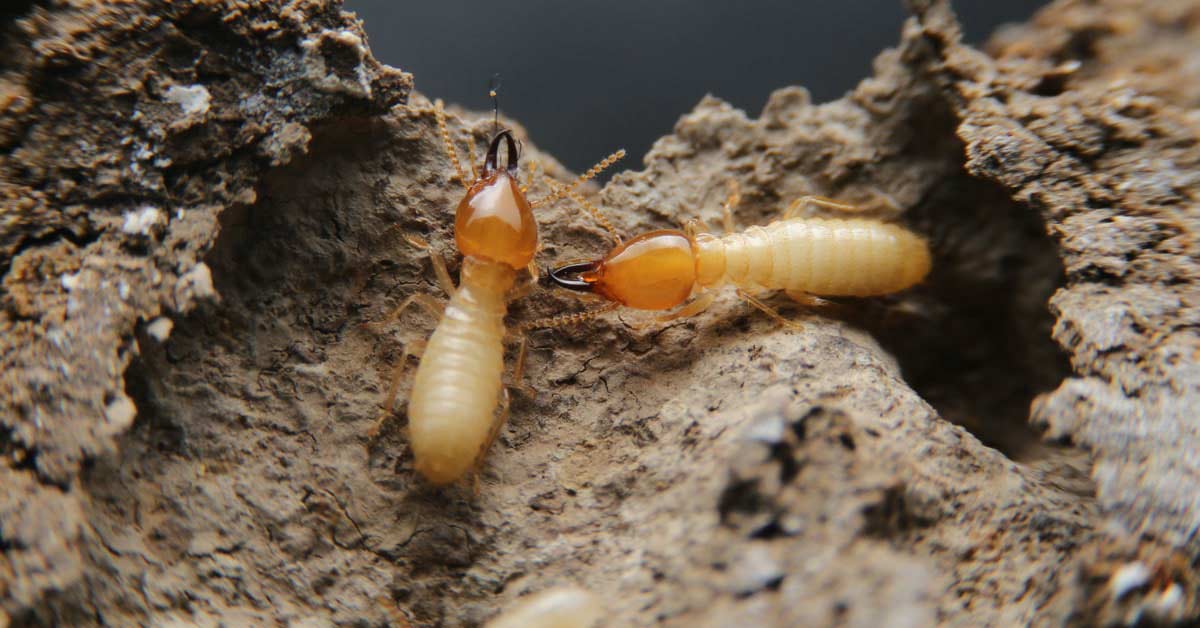
Termites are arguably the most financially dangerous pest on this list, and spring is when their activity reaches a critical threshold. Specifically, alate swarms (the winged reproductive termites that establish new colonies) typically emerge during warm, humid evenings following spring rain, from approximately October through to December. If you see what looks like a mass of flying ants around your lights or windows after rainfall, stop and look closely. Those may well be termite swarmers.
Underground worker populations also intensify their foraging during spring, pushing further into timber structures in search of cellulose material. Sydney’s sandstone-heavy soils and high numbers of timber-framed homes create conditions that termites, particularly Coptotermes acinaciformis, exploit ruthlessly.
Identification Signs
- Mud tubes running along foundations, walls, or stumps (these are the highways termites build to travel between soil and timber)
- Hollow-sounding timber when knocked gently with a screwdriver handle
- Bubbling, warped, or sagging paint on walls and skirting boards (moisture from termite activity causes this)
- Discarded wings near windowsills, light fixtures, or doorframes after a swarming event
- Frass (termite droppings) that resembles fine sawdust or granular pellets near timber
DIY Prevention
- Eliminate all timber-to-soil contact around your property: move woodpiles, sleepers, and debris away from the house
- Ensure adequate subfloor ventilation to reduce moisture levels beneath the building
- Fix leaking gutters, downpipes, and irrigation systems immediately. Termites are attracted to persistent moisture more than almost anything else
- Do not store cardboard boxes, old newspapers, or untreated timber inside roof voids or subfloors
- Keep garden beds and mulch at least 150mm from the building perimeter
When to Call a Professional
This is not optional. Termite prevention absolutely requires a professional inspection, particularly in Sydney, where 1 in 3 homes will experience termite activity at some point. DIY prevention reduces risk but cannot replace a qualified assessment. BugFree’s termite inspection service uses thermal imaging cameras and moisture meters to detect activity hidden behind walls and under floors, well before visible damage appears. Annual inspections are the industry standard recommendation under Australian Standard AS3660.
3. Wasps
Emergence Timing
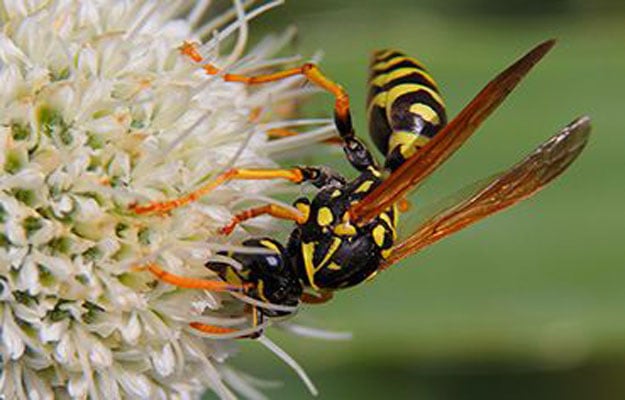
Wasp activity in Sydney picks up sharply in spring, particularly from October onward. European wasps (Vespula germanica), which are the most problematic species for Sydney residents, begin building new nests in September as fertilised queens emerge from overwintering. Paper wasps similarly establish nests from spring, favouring eaves, pergola frames, letterboxes, and garden sheds. By late spring, what started as a queen alone can become a colony of several hundred workers.
Identification Signs
- Papery, honeycomb-structured nests under eaves, behind shutters, or in wall cavities
- Regular wasp traffic in and out of a particular point in the garden, roof, or wall
- Wasps foraging at rubbish bins, BBQ areas, or near sweet food and beverages outdoors
- Aggressive behaviour when you approach a particular garden area, fence line, or structure
DIY Prevention
- Inspect eaves, pergolas, and garden structures monthly from September onward. Early-stage nests (roughly the size of a golf ball) are far easier to manage than established colonies
- Seal gaps in wall cladding, roof voids, and around pipe penetrations where queens look to establish nests
- Keep bin lids firmly closed and clean BBQ grill plates after use
- Avoid leaving pet food outdoors for extended periods
When to Call a Professional
Do not attempt to remove an established wasp nest yourself. European wasps, in particular, are aggressive defenders and can sting multiple times, unlike bees. Reactions can be severe. BugFree’s wasp control service is equipped for safe, same-day nest removal across all Sydney suburbs. If you spot a nest, keep your distance and book an inspection promptly.
4. Cockroaches
Emergence Timing
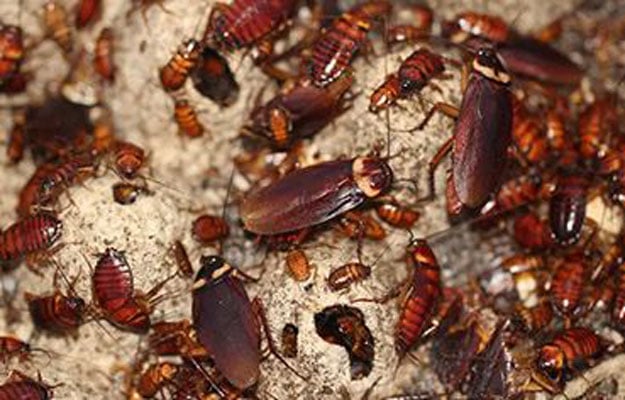
Cockroaches are active year-round in Sydney, but spring and summer see a marked acceleration in breeding and movement. Warmer temperatures shorten the German cockroach’s egg-to-adult cycle to as little as 40 days, meaning populations can grow from a handful to hundreds within a single season. American cockroaches also become more mobile outdoors in spring, travelling through stormwater drains, subfloors, and sewer connections into buildings.
Sydney’s combination of humidity and built environment density makes cockroaches a persistent challenge, not just a warm-weather annoyance.
Identification Signs
- Droppings resembling ground coffee or black pepper along skirting boards, inside cupboards, and behind appliances
- A musty, oily odour in kitchen cabinets or under sinks (a reliable sign of established activity)
- Egg cases (oothecae) are attached to surfaces inside cabinets, behind fridges, or in bathroom vanities
- Live sightings during the day, which typically indicate the infestation is large enough that cockroaches are being pushed out of hiding during light hours
DIY Prevention
- Deep clean behind and beneath kitchen appliances, particularly fridges and dishwashers, which generate warmth and moisture
- Fix leaking pipes, dripping taps, and any condensation issues under sinks
- Avoid leaving unwashed dishes overnight
- Seal gaps around plumbing penetrations with silicone or expanding foam
- Use bin liners and empty bins daily in kitchens
When to Call a Professional
Cockroach infestations are notoriously difficult to eliminate with retail sprays alone, largely because the products available to consumers do not reach harbourage areas or address egg cases effectively. BugFree’s cockroach control service uses a combination of gel baiting, insect growth regulators, and targeted spray application to eliminate both live insects and the breeding cycle. A professional treatment is the only reliable way to clear an established infestation.
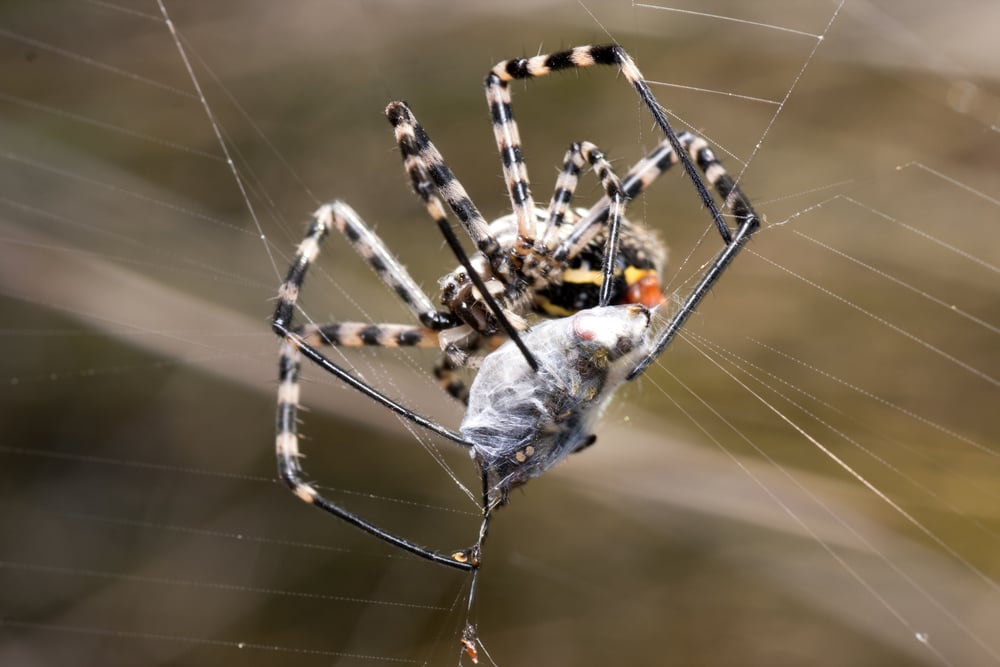
5. Spiders
Emergence Timing
Spring triggers a significant increase in spider activity across Sydney as males of many species emerge to search for mates. This is particularly notable for redback spiders, which become much more visible from October onward. Huntsman spiders also move indoors more frequently in spring as they follow insect prey. Around the same time, funnel-web spiders, which are common in bushland-adjacent suburbs across Sydney’s north and west, begin their breeding activity.
Identification Signs
- Webs appearing overnight around eaves, window frames, outdoor furniture, and garden beds
- Egg sacs attached to web structures in sheltered outdoor areas, such as under decking, in letterboxes, or between stored items in sheds
- Redback spiders in their characteristic irregular, sticky webs, low to the ground, typically in sheltered spots such as under outdoor furniture, pool equipment, or garden pots
- Funnel-web burrows in cool, moist garden soil near rocks, logs, or retaining walls
DIY Prevention
- Remove web-prone clutter from around the exterior of the home: stacked timber, garden equipment, and stored boxes
- Shake out gardening gloves, shoes left outdoors, and pool toys before using them
- Install door sweeps and check fly screens for gaps, particularly on ground-floor windows
- Clear leaf litter and dense vegetation from garden beds close to the building
- Reduce exterior lighting where possible, since lit areas attract insects that attract spiders
When to Call a Professional
Funnel-web and redback bites are medical emergencies. If you are regularly finding either of these species on your property, or if you have children or pets and are concerned about exposure, professional spider treatment provides a residual barrier that DIY products cannot match. BugFree’s spider control service covers all common and medically significant species across Sydney.
6. Rodents
Emergence Timing
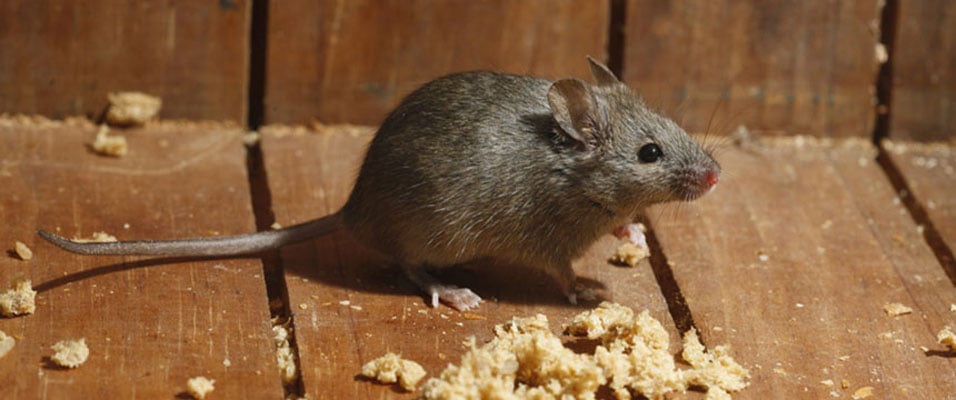
While rodents peak during autumn and winter as they seek warmth, spring brings a secondary challenge: breeding. Rats and mice that established themselves inside wall cavities and roof voids over winter begin reproducing aggressively as food sources outside increase. A single pair of mice can theoretically produce over 100 offspring in a year under optimal conditions. Spring is when indoor populations, if left unchecked, start to explode.
Norway rats (Rattus norvegicus) are more common in lower areas such as subfloors and drains, while roof rats (Rattus rattus) are the species Sydney homeowners most commonly hear scratching in ceiling voids at night.
Identification Signs
- Scratching or scurrying sounds in ceilings, walls, or under floors, particularly at night
- Droppings shaped like rice grains (mouse) or capsule-shaped pellets (rat) near food storage, inside drawers, or along wall edges
- Gnaw marks on timber, food packaging, electrical cables, and PVC pipes
- Nesting material, such as shredded insulation, paper, or fabric, tucked into undisturbed corners
- Smear marks along wall edges and pipes, caused by the oils on rodent fur
DIY Prevention
- Audit the exterior of your property for gaps larger than 10mm (mice) or 20mm (rats) and seal them with steel wool packed behind metal flashing or concrete
- Store food in hard-sided containers. Rodents chew through cardboard and plastic bags with ease
- Keep compost bins rodent-proof and avoid putting cooked food scraps in open pile composting
- Trim tree branches that overhang or touch the roofline, as these are common roof access points
- Clean up fallen fruit in gardens regularly and avoid leaving pet food bowls outside overnight
When to Call a Professional
Retail baits and traps can capture individual rodents but rarely eliminate an active population. BugFree’s rodent control service uses a combination of bait station installation, trap placement, and entry point identification to stop current activity and prevent re-entry. If you are hearing rodent activity inside the structure, book a professional assessment before the spring breeding cycle accelerates the population further.
7. Drain Flies
Emergence Timing
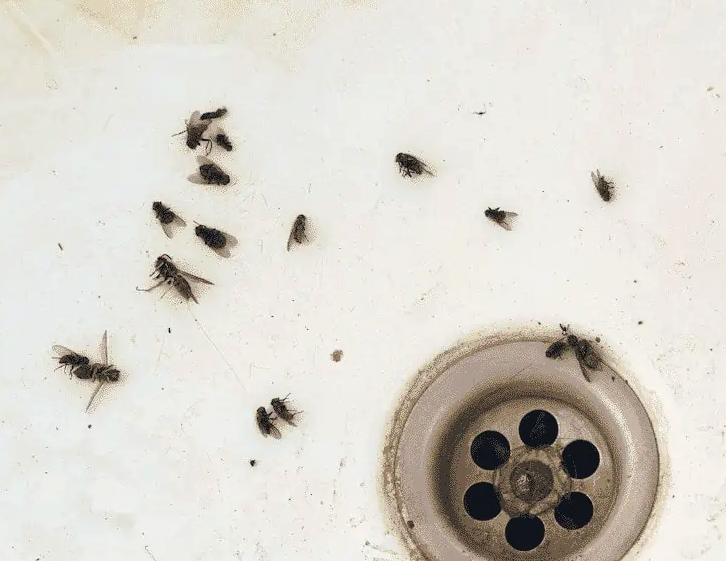
Drain flies (Psychoda spp.) are one of the most commonly overlooked spring pests in Sydney. Unlike most insects on this list, they do not come from outdoors. They breed in the organic slime that accumulates inside drains, including bathroom and kitchen drains, laundry troughs, and sump pits. Warmer spring temperatures accelerate decomposition in drain biofilm, which creates ideal breeding conditions. An infestation can go from zero to noticeable within a couple of weeks as temperatures rise.
They are small (roughly 2mm), moth-like in appearance, and tend to rest on wall surfaces near the drain source. While not dangerous in the way cockroaches or rodents are, large numbers indicate a hygiene issue that should be addressed.
Identification Signs
- Small, fuzzy, grey or brown moth-like insects resting on bathroom and kitchen walls
- Insects are hovering slowly around drain openings, particularly in the evening
- Sticky tape placed over a drain overnight captures adults if you are unsure whether the drain is the source
- Organic, gelatinous buildup is visible inside the drain when inspected with a torch
DIY Prevention
- Clean all drains with a stiff brush and a dedicated drain-cleaning product or a baking soda and vinegar flush weekly during spring
- Do not allow water to pool stagnantly in drain traps, particularly in bathrooms that are infrequently used
- Clean the rubber seals inside the drain covers, where biofilm accumulates unseen
- Check outdoor drains, gutters, and downpipes for leaf sludge accumulation
- Improve bathroom ventilation to reduce moisture levels that accelerate biofilm growth
When to Call a Professional
Persistent drain fly activity despite cleaning usually means the breeding source is inside a drain line that standard cleaning tools cannot reach. BugFree’s general pest control team can assess drain-related infestations and recommend appropriate treatment for the underlying hygiene issue driving the problem.
Your Spring Pest Prevention Checklist
Use this quick-reference checklist each September to reduce your exposure to all seven pest groups before activity peaks.
| Area | Action |
|---|---|
| Kitchen | Seal all food in airtight containers, fix leaking pipes, and clean the drain weekly |
| Bathroom | Clear drain biofilm, improve ventilation, and check for cockroach activity under the vanity |
| Roof void | Arrange termite and rodent inspection, check for wasp entry points |
| Subfloor | Inspect for mud tubes, moisture, and ventilation adequacy |
| Garden perimeter | Remove timber debris, mulch clearance from walls, trim overhanging branches |
| Eaves and pergola | Inspect for early wasp nests and spider egg sacs |
| Exterior walls | Seal all gaps over 10mm with appropriate materials |
| Drains (outdoor) | Clear leaf and organic debris, ensure no standing water |
The Value of a Professional Spring Pest Inspection
DIY prevention measures make a genuine difference to your risk level. This is not a dismissal of what you can do yourself. But there are two things that no amount of gap filling and bin management can replace.
The first is access. Termites, rodents, and cockroaches operate in spaces that are physically inaccessible to most homeowners: inside wall cavities, beneath slab edges, in roof void corners, and deep in drain lines. A trained technician with the right tools can detect activity in these areas before it becomes a structural or health problem.
The second is treatment methodology. Retail pest products are intentionally formulated at lower concentrations for safety reasons. Professional-grade products, applied correctly to harbourage areas and breeding sites, operate at a fundamentally different level of efficacy.
BugFree’s general pest control service covers cockroaches, ants, spiders, and silverfish. For termite-specific assessments using thermal imaging and moisture detection, book a dedicated termite inspection. For wasp and spider concerns around the building exterior, the same licensed technicians handle all species.
Serving Sydney since 1990 with a 4.9-star rating from over 5,000 verified reviews. Same-day service available. Call 1300 855 548 or book online.
Frequently Asked Questions
When does spring pest season start in Sydney?
Pest activity typically begins increasing from late August and peaks between October and November. Termite swarming events align closely with the first warm rainy periods of the season.
What is the most dangerous spring pest in Sydney?
Termites cause the most financial damage, with the potential to compromise structural timber in a property over months without visible signs. Among venomous species, funnel-web spiders and redback spiders are the most medically significant.
Can I prevent spring pests without professional treatment?
DIY measures significantly reduce risk, particularly for ants, cockroaches, and drain flies. However, termites and established rodent populations require professional assessment and treatment for effective control.
How often should I have a pest inspection in Sydney?
An annual general pest inspection is the minimum recommended. Termite inspections under Australian Standard AS3660 should be conducted every 12 months, or more frequently for high-risk properties near bushland or with previous termite history.
Does BugFree service my suburb?
BugFree covers all of Greater Sydney, including Western Sydney, the Northern Beaches, Sutherland Shire, Inner West, Eastern Suburbs, and the Hills District. Check bugfree.com.au or call 1300 855 548 for same-day availability.
—————————————————————————————————————————————————————————————————————————————————————————-
About the author: This guide was prepared by the BugFree Pest Control team, a family-owned Sydney pest management business operating since 1990. All BugFree technicians hold current NSW EPA licences and are members of the Australian Environmental Pest Managers Association (AEPMA).
Residential & Domestic
Professional services with affordable Prices
Our fully licensed and experienced technicians will provide you and your family members with a pest control treatment catered for you and your home.

Commercial Pest Control
100% environmentally safe and friendly
All our chemical treatments are approved under Australian Standards so you can be confident of a safe and quality outcome.